

Introduction
As Cali Clear vape products gain attention online, buyers may encounter counterfeit products, misleading packaging and sellers who make unverified claims about authenticity. A product can look convincing in photographs yet still come from an unknown or unreliable source.
If you want to understand the difference between a fake vs real Cali Clear vape, you need to look beyond the packaging. This guide explains how to examine product labels, check QR codes, assess seller credibility and recognise warning signs that may indicate a counterfeit product.
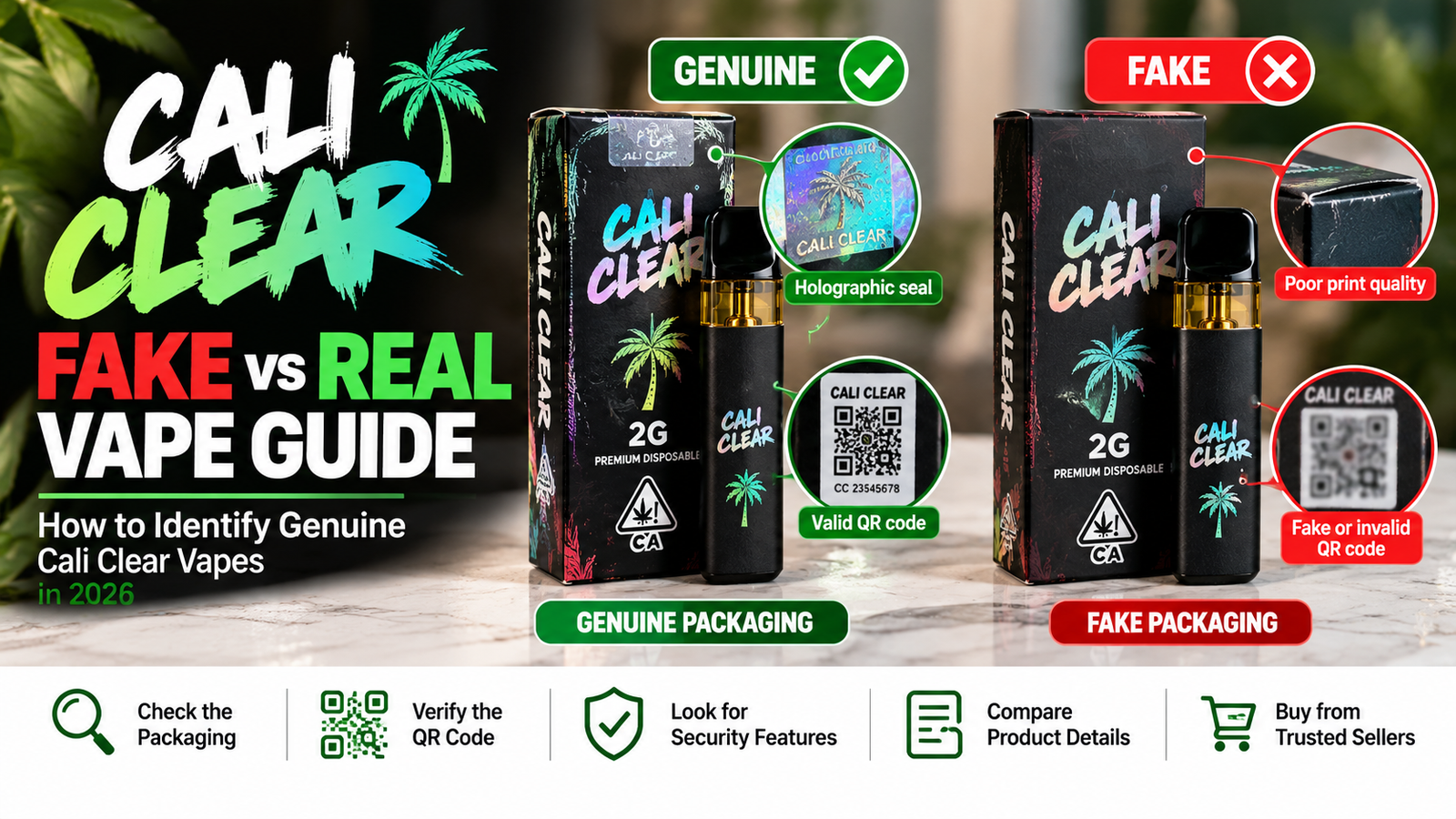
1. Examine the Packaging Carefully
Packaging offers a useful starting point when checking a vape product. Counterfeiters sometimes copy a brand’s colours, logo and general design, so visual similarities do not prove authenticity.
Look carefully at the following details:
- Print quality: Blurry text, spelling mistakes, uneven printing or inconsistent colours may indicate a problem.
- Logo consistency: Compare the logo and product name with information from a reliable, independently verified brand source.
- Product labelling: Check whether the packaging clearly identifies the product, manufacturer or responsible business, ingredients where applicable, and relevant warnings.
- Seal and box condition: Broken seals, damaged packaging or signs of tampering deserve attention, although genuine products can also arrive with damaged boxes.
- Batch information: Missing, inconsistent or altered batch details may raise concerns.
Do not treat any single feature as conclusive proof. Counterfeit packaging can look professional, while legitimate packaging may change between production runs or markets.
2. Check the QR Code Carefully
Some product packages include QR codes that claim to provide product information or authentication details. However, the presence of a QR code does not automatically make a product genuine.
Use these precautions when checking one:
- Scan the code with your phone’s camera, but do not immediately trust the destination.
- Inspect the website address before opening it. Watch for misspellings, unusual domains and misleading lookalike websites.
- Check whether the destination belongs to a brand or verification service that you can independently confirm.
- Look for clear information about the product, batch or verification process.
- If the code directs you to an unfamiliar website, requests unnecessary personal information or produces suspicious results, stop and investigate further.
A counterfeit seller can copy a genuine QR code and print it on multiple boxes. Even a code that opens a professional-looking website may not authenticate the specific device in your hand.
The safest approach: Find an independently verified contact or website for the brand or responsible manufacturer and ask whether it can confirm the product’s batch or serial number.
3. Look for Security Features and Tampering on the cali clear vape
Some manufacturers use tamper-evident seals, holographic labels, serial numbers or other security features. These can help with verification when the manufacturer confirms that the features are genuine and explains how to check them.
Be cautious if you notice:
- A seal that appears to have been opened and reapplied.
- Labels placed over other labels or important product information.
- Serial or batch numbers that appear altered.
- A security label that looks damaged or inconsistent with the manufacturer’s official guidance.
- Different identification details on the box and device.
However, do not assume that every genuine Cali Clear product has a holographic seal, unique QR code or particular serial-number format. Only rely on features confirmed by a trustworthy source for the specific product and market.
4. Compare the Product Details
Product names, flavours, stated ingredients, device specifications and packaging information can help you identify inconsistencies.
Compare the details on the box with information from a reliable source, where available. Check whether the product description, manufacturer details and warnings match. Treat dramatic claims, unexplained changes in specifications or contradictory labels as reasons to investigate.
Keep in mind that packaging and product ranges can change over time. A difference between two boxes does not automatically prove that one is fake.
Never rely on photographs from social media or online marketplaces as your only reference. Images may be outdated, edited or copied from another seller.
5. Check the Seller Before Buying
Seller credibility is often more useful than appearance alone. A convincing box cannot compensate for a seller who cannot explain where the product came from.
Before making a purchase, consider whether the seller:
- Provides verifiable business and contact details.
- Explains the product’s source and supply chain.
- Offers clear purchase terms and a proper receipt.
- Can direct you to independently verifiable manufacturer information.
- Avoids unrealistic claims about quality, safety or authenticity.
Be particularly careful with sellers who pressure you to buy quickly, refuse reasonable questions or offer prices that seem unusually low without a credible explanation.
Customer reviews can provide context, but they are not definitive evidence. Reviews may be fabricated, copied or written before a buyer has properly checked a product.
6. Why Packaging Alone Cannot Prove Authenticity
One of the biggest mistakes buyers make is assuming that a well-designed box proves a product is genuine.
Counterfeiters can reproduce logos, colours, labels, printed codes and other visible details. They may even copy photographs of genuine products and use them to advertise something entirely different.
For that reason, you should assess several independent factors together:
- The credibility of the seller.
- The consistency of product and batch information.
- The legitimacy of any authentication process.
- The condition of the packaging and device.
- Confirmation from a verifiable manufacturer or responsible supplier, if available.
Even when all these checks look reassuring, they may not establish the contents or safety of a vape. Independent testing and reliable supply-chain records provide stronger evidence than appearance alone.
7. What Should You Do If You Suspect a Fake?
If you suspect that a Cali Clear vape is counterfeit, damaged or tampered with, do not use it to test whether it works.
Instead:
- Keep the packaging, receipt and order confirmation.
- Photograph the product, labels, batch details and any suspicious features.
- Contact the seller and request verifiable information about the product’s origin.
- Contact an independently verified manufacturer or responsible supplier if one can be identified.
- If the seller cannot resolve the concern, consider reporting the listing to the marketplace or the relevant consumer-protection or product-safety authority.
If the device leaks, overheats, swells or shows signs of battery damage, stop handling or charging it and follow appropriate battery-safety guidance.
If you have already used a product and develop concerning symptoms, seek medical advice promptly; seek emergency help for severe symptoms.
Frequently Asked Questions
How can I tell a fake vs real Cali Clear vape?
Start by checking the seller, packaging, product labels and any manufacturer-confirmed authentication method. No single visual detail or QR code can establish authenticity on its own.
Does a QR code prove that a Cali Clear vape is genuine?
No. Counterfeiters can copy QR codes or direct buyers to imitation websites. Verify the destination independently and ask a confirmed manufacturer or supplier whether it can authenticate the product.
Are spelling mistakes a sign of a fake vape?
Spelling errors, blurry printing and inconsistent labels can be warning signs. However, their absence does not prove authenticity, and packaging differences can occur for legitimate reasons.
Can a genuine-looking box contain a counterfeit vape?
Yes. Counterfeit products can use copied packaging and branding. You should not rely on the box alone to establish the product’s origin or contents.
Is a counterfeit vape safe if it looks and works normally?
No conclusion about safety follows from appearance or basic functionality. An unfamiliar product may contain undisclosed substances or have electrical or battery defects, so avoid using a product you reasonably suspect is counterfeit.
Final Thoughts
Identifying a fake vs real Cali Clear vape takes more than comparing logos or scanning a QR code. Examine the packaging, check the product details, investigate the seller and seek independent confirmation wherever possible.
Most importantly, do not confuse convincing branding with proof of authenticity. If you cannot verify a product’s origin or have concerns about tampering, the safer choice is not to use it.